Most water testing kits are accurate enough to flag a problem but not accurate enough to tell you the exact number you need. Test strips typically read in wide ranges (like “0–250 ppm” hardness); a 2023 peer-reviewed study of home kits found performance “highly variable” depending on the contaminant and water source; and none of the drugstore or hardware-store kits is certified for legal or health-decision use. For anything beyond a quick screening of bacteria, lead, or properly sizing your softener, a certified lab or an in-home professional test is the only way to get a trustworthy number.
Why “Accurate” Depends on the Kit You Buy
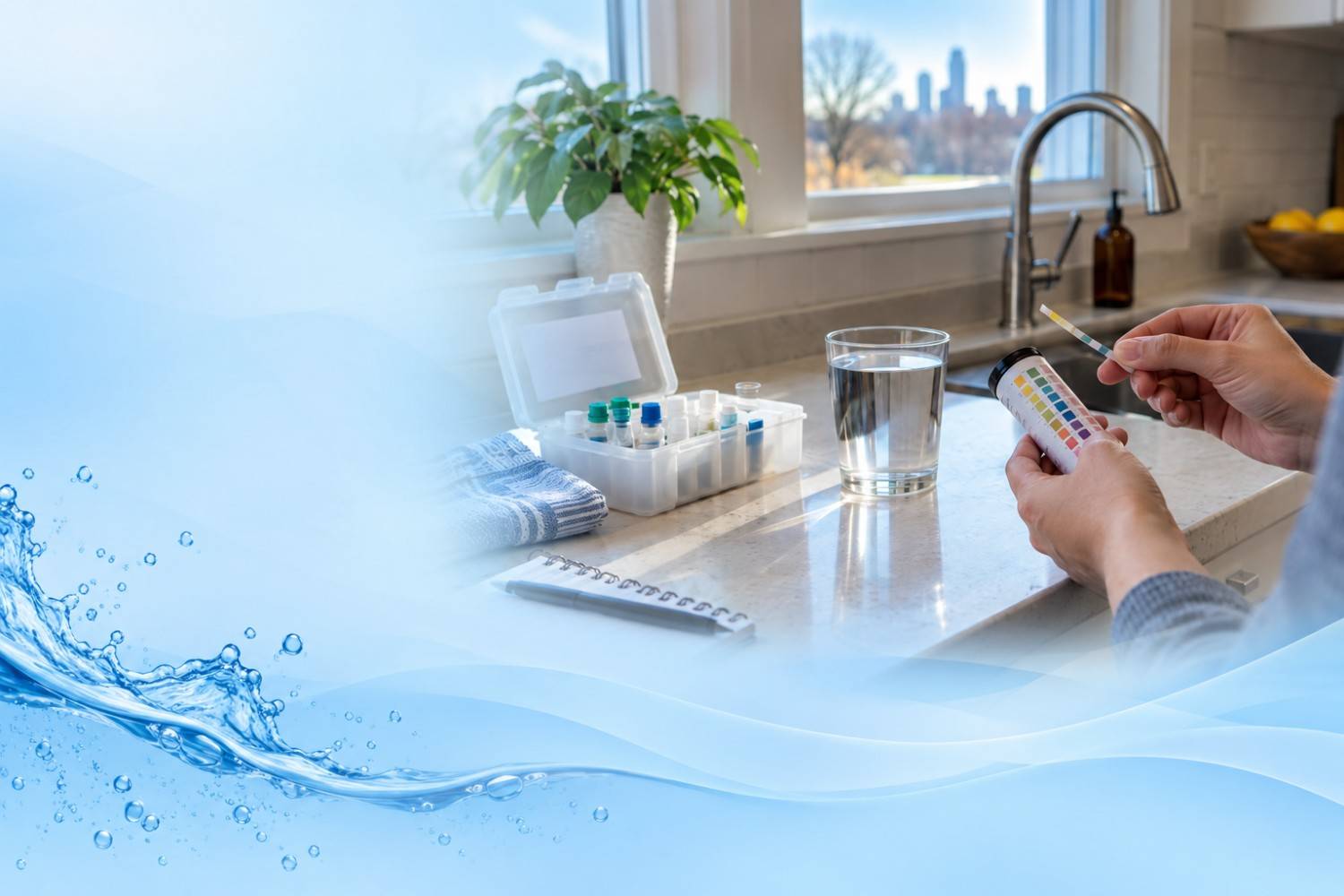
Not all water testing kits work the same way, and that’s exactly where most Ohio homeowners get confused. Test strips (the kind sold at Home Depot, Lowe’s, or Amazon under brands like Pro-Lab, Safe Home, and PurTest) dip in water and change color. They’re fast and cheap, but strip reports ranges, not precise readings, and results can shift depending on lighting, timing, and how you read the colour chart. Digital meters give a real number instead of a color match, but they only measure total dissolved solids; they can’t tell you what is dissolved, so a “clean” reading can still hide something that filtering those contaminants out would otherwise catch.
- 14 in 1 water test strips and similar multi-parameter strips (chlorine, hardness, iron, pH, nitrate, nitrite, alkalinity, and more) are good for a first look at overall water profile test kit results, but broad coverage usually means each reading is less precise, not more.
- Mail-in lab kits, like a Pro Lab total water quality test kit or Pro Lab lead in water test kit, are more reliable because a certified lab, not a colour chart, reads the sample. Accuracy is good, but turnaround takes days, and each mail-in usually covers one contaminant group.
A hardness strip is a good example of the gap. Verify water hardness test strips can tell you that your water is “hard”, but the reading usually lands somewhere in a broad band, not an exact grains-per-gallon figure. That band is fine for curiosity, but it isn’t precise enough to know what qualifies as hard water in your specific home versus your neighbor’s.
What Independent Research Actually Found
This isn’t just a sales pitch; it’s backed by science. A peer-reviewed evaluation published in the Journal of Water and Health tested off-the-shelf home kits for iron, copper, manganese, and fluoride across tap water, river water, and lab-grade water. The researchers found the kits were repeatable but inconsistent, performed best in clean water with no interference, and were unregulated, with no independent certification process. Their conclusion lines up with what we see across common household water problems generally: a home kit can tell you if you’re above or below a safety limit, but you shouldn’t rely on the exact number it gives you.
Where DIY Kits Fall Short for Ohio Water
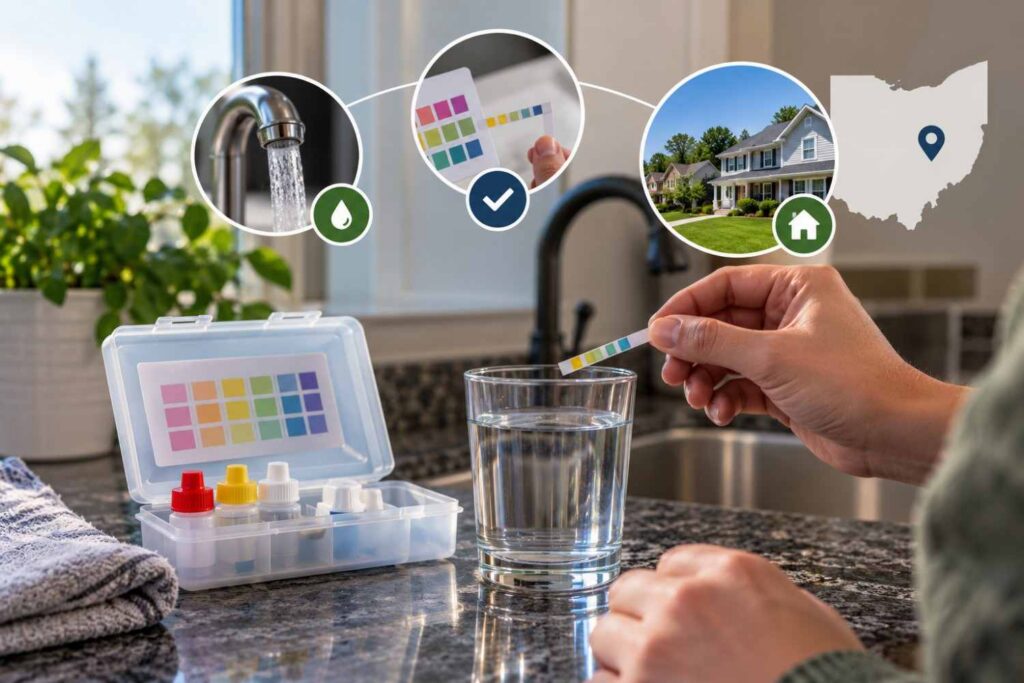
Ohio has some of the hardest water in the country, and most homes here also deal with iron, sulfur odour, or well water issues that a basic strip test wasn’t designed to catch. A basic safe home bacteria in water test kit can flag total coliform, but it can miss low-level E. coli contamination or give a false negative if the sample sits too long before reading. A pro lab radon in water test kit needs a sealed sample and lab analysis to be meaningful; a strip simply can’t detect radon at all.
If you’re shopping for the best at-home well water test kit, remember that private wells aren’t regulated by the EPA the way city water is, so you’re relying entirely on the kit’s accuracy with no municipal report to double-check against. That’s especially true given contaminants specific to Ohio wells, which can vary block to block even within the same town.
A Quick Note on Speciality Kits
Not every search for “water testing kits” is about drinking water. Kits marketed for water pond tests or total ammonia nitrogen tests are built for aquaculture and pond monitoring, where ammonia and nitrite spikes are the main concern, not hardness or lead. If your goal is household drinking or well water, skip these; check our water education resources instead for guidance built specifically for home water, not pond chemistry.
DIY Kit vs. Free Professional Test
|
Test Strips (Pro-Lab, PurTest, Varify) |
Digital Meter |
Mail-In Lab Kit |
Free In-Home Test |
|
|
Result type |
Color range |
TDS number only |
Lab-certified |
Exact, on-site |
|
Turnaround |
Instant |
Instant |
3–7 days |
Same day |
|
Best for |
Quick screening |
Overall dissolved solids |
Confirming a specific contaminant |
Sizing equipment, full picture |
|
Cost |
$10–$30 |
$15–$40 |
$40–$150+ |
Free |
A varify complete water test kit or purtest home water analysis kit is a reasonable first check if you’re just curious. But the real decision most homeowners are actually weighing is hard water vs soft water, and a range from a strip rarely settles that question on its own.
Get an Exact Reading, Not a Range
Easton Water Solutions has tested Logan County water since day one. Our certified specialists come to your home and measure exactly what’s in your water hardness, iron, pH, and more using calibrated equipment, not a colour chart. If a store-bought kit has you unsure, it costs nothing to book a free water evaluation and get a straight answer instead of a range.
Frequently Asked Questions
Are home water test kits accurate?
They’re accurate enough to detect whether a contaminant is present and roughly how much, but most give ranges rather than exact numbers, and results vary by brand and contaminant.
Are Home Depot or drugstore water test kits reliable?
They’re a reasonable first screening tool for basics like chlorine, pH, and hardness, but they aren’t certified for legal, health, or equipment-sizing decisions.
How accurate are water test strips compared to a lab test?
Lab tests are significantly more precise because a certified technician reads the sample with calibrated equipment, instead of a person matching colours on a chart.
Can a home kit test for bacteria in well water accurately?
Basic kits can flag total coliform bacteria, but they can produce false negatives, so private well owners should confirm any concerning result with certified lab testing.
Do water test strips expire or lose accuracy over time?
Yes. Test strips are chemically reactive and can lose sensitivity after their expiration date or if exposed to humidity, giving less reliable results.
How much does an accurate water test cost?
DIY kits run $10–$30, mail-in lab kits run $40–$150+, and many local water treatment companies, including Easton Water Solutions, offer certified in-home testing for free.
Should I test my well water every year?
Yes, the CDC and most state health departments recommend testing private wells annually for bacteria, nitrates, and other contaminants that can change with weather and seasons.
References:
Protect Your Home’s Water (Private Wells)
https://www.epa.gov/privatewells/protect-your-homes-water
Wikipedia – Water Testing
https://en.wikipedia.org/wiki/Water_testing
NSF (National Sanitation Foundation) – What Does Water Filter Certification Mean
https://www.nsf.org/blog/consumer/what-does-water-filter-certification-mean