
For most Ohio offices, a bottleless (point-of-use) water cooler is the best choice; it connects to your existing water line, filters on demand, and eliminates recurring jug deliveries. Small offices under 10 people often do better with a compact bottled or countertop cooler, while larger teams benefit from a freestanding bottleless unit with hot-and-cold dispensing.
Choosing the right office water cooler isn’t just about picking whatever’s cheapest online. It affects your team’s hydration, hygiene, break room budget, and even how your workplace looks to visitors and clients. After installing hundreds of water coolers across Bellefontaine and Central Ohio, we’ve seen firsthand which setups actually hold up to daily office use and which ones become a maintenance headache within a year.
Why the Right Water Cooler Matters More Than You Think
Providing accessible drinking water isn’t just a nice perk; OSHA requires employers to provide potable water in the workplace. Beyond compliance, a well-chosen water cooler keeps employees hydrated and focused, cuts down on sick days linked to poor water quality, and reduces the plastic waste of individual bottled water. The wrong cooler, on the other hand, means constant jug-lifting, mineral buildup, or a unit that can’t keep up with a busy break room which is why most growing teams eventually move toward an office hydration setup sized for their actual daily usage instead of a generic big-box unit.
Types of Office Water Coolers Compared
|
Type |
Best For |
Water Source |
|
Bottleless (Point-of-Use) |
Mid-to-large offices with plumbing access |
Building a water line, filtered on-site |
|
Bottled (5-Gallon Jug) |
Small offices, leased spaces, no plumbing |
Delivered water jugs |
|
Countertop |
Small offices, break rooms tight on space |
Bottled or bottleless |
|
Freestanding Floor Unit |
High-traffic offices, warehouses, lobbies |
Bottled or bottleless |
|
Hot & Cold Dispenser |
Offices that want tea/coffee water too |
Either system |
Bottleless vs. Bottled: Which Wins for Offices?
This is the question we get asked most, and the honest answer is: it depends on your setup.
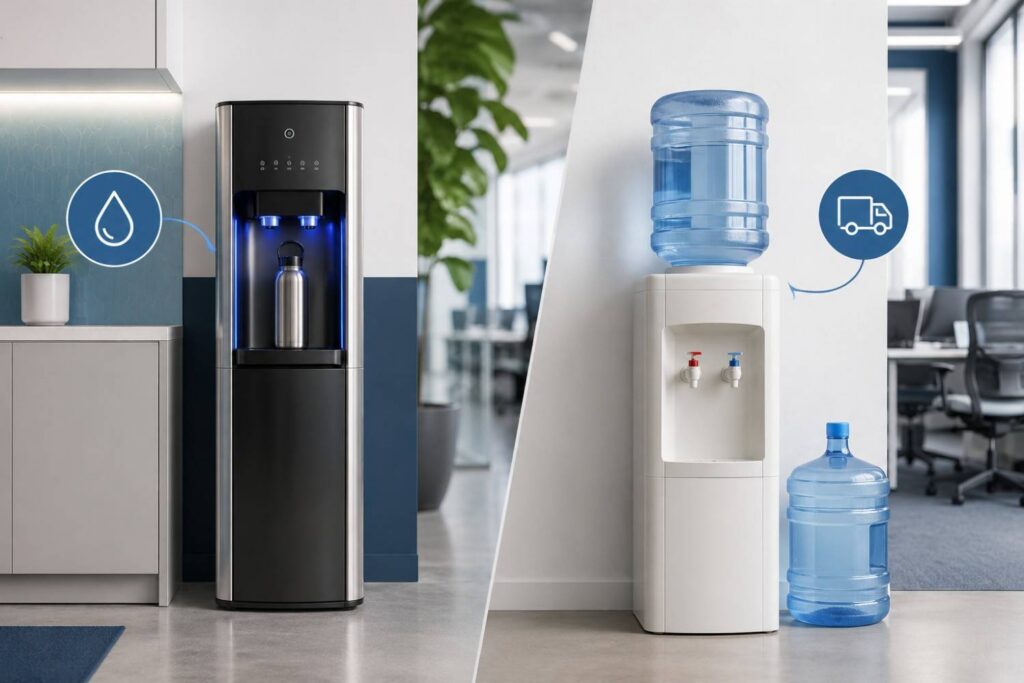
Bottleless water coolers: Connect directly to your building’s water line and filter it on demand. There’s no heavy lifting, no running out mid-afternoon, and no recurring delivery fees, just a flat monthly cost. They also carry less contamination risk than a bottled unit, since there’s no manual jug handling or open reservoir exposed to air.
Bottled water coolers: Still a smart pick when plumbing isn’t available, for temporary office spaces, or for small teams where a fully plumbed installation isn’t worth the cost. They’re simple, familiar, and require no installation beyond plugging in.
For most established Ohio offices with 10 or more employees, bottleless wins on long-term cost and hygiene. For smaller offices or leased spaces, bottled remains is a practical, low-commitment option.
How to Choose the Best Water Cooler for Your Office
- Count your team: Under 10 people: a countertop or bottled cooler is usually enough. 10–50 people: a freestanding bottleless unit. 50+: consider multiple units or a high-output commercial system.
- Check your plumbing: No accessible water line? Bottled is your fastest option.
- Decide on temperature needs: Break rooms that serve tea, oatmeal, or instant coffee benefit from a hot-and-cold unit.
- Factor in Ohio’s hard water: Ohio has some of the hardest water in the country, which means mineral scale builds up faster inside dispensers and filters here than in many other states. A cooler with a solid filtration stage or a properly maintained filter schedule matters more locally than it might elsewhere.
- Weigh rent vs. buy: Renting includes maintenance and filter changes; buying costs more upfront but nothing monthly.
If you’d rather skip the trial-and-error, our team offers a free consultation and site assessment where we recommend the right cooler type for your actual space and water usage – no guesswork, no upselling.
Our Recommendation by Office Size
- Small office (1–10 people): Compact countertop bottleless dispenser or a single bottled cooler.
- Medium office (10–50 people): Freestanding bottleless hot-and-cold unit near the break room.
- Large office / commercial facility (50+ people): Multiple bottleless stations or a high-capacity commercial system, placed on each floor.
If your team is also dealing with hard water issues elsewhere in the building, spotty dishes, dry skin, or appliance buildup, it’s worth understanding which drinking-water option actually saves more money over time before you commit to one system for the whole office.
Frequently Asked Questions
What is the best type of water cooler for an office?
For most offices with 10+ employees, a bottleless point-of-use water cooler is the best option because it eliminates jug deliveries and provides unlimited filtered water on demand.
Is a bottleless water cooler better than a bottled one for an office?
Bottleless coolers are generally better for hygiene and long-term cost in offices with plumbing access. Bottled coolers are better when plumbing isn’t available or usage is low.
How much does an office water cooler cost per month?
Costs vary by cooler type, rental vs. purchase, and usage, but most Ohio businesses can expect a predictable flat monthly rate with a rental plan that includes maintenance.
How often should an office water cooler be cleaned?
Office water coolers should be sanitised every 3–6 months, with filters replaced every 6–12 months depending on usage and water quality.
Do offices legally need to provide drinking water?
Yes, OSHA requires employers to provide potable water that is readily accessible to all employees in the workplace.
What size water cooler do I need for my office?
Base it on headcount: under 10 people can use a compact unit, 10–50 people need a standard freestanding cooler, and 50+ people typically need multiple units or a high-capacity system.
Ready to stop guessing and get the right water cooler for your Ohio office? Get your break room’s water tested by a local specialist and walk away with a setup that actually fits your team.
References
1. EPA – Consumer Confidence Reports (CCR)
https://www.epa.gov/ccr
Description: Explains why the EPA requires every community water system to publish an annual water quality report and what that report is legally required to cover.
2. EPA – Protect Your Private Well
https://www.epa.gov/privatewells/protect-your-private-well
Description: EPA’s official guidance for private well owners, since wells (unlike city systems) aren’t regulated by the EPA and testing responsibility falls entirely on the homeowner.
5. Wikipedia – Hard Water
https://en.wikipedia.org/wiki/Hard_water
Description: General-audience overview of how hardness forms and its effects on plumbing and appliances, good as a plain-language reference link for readers wanting more background.