
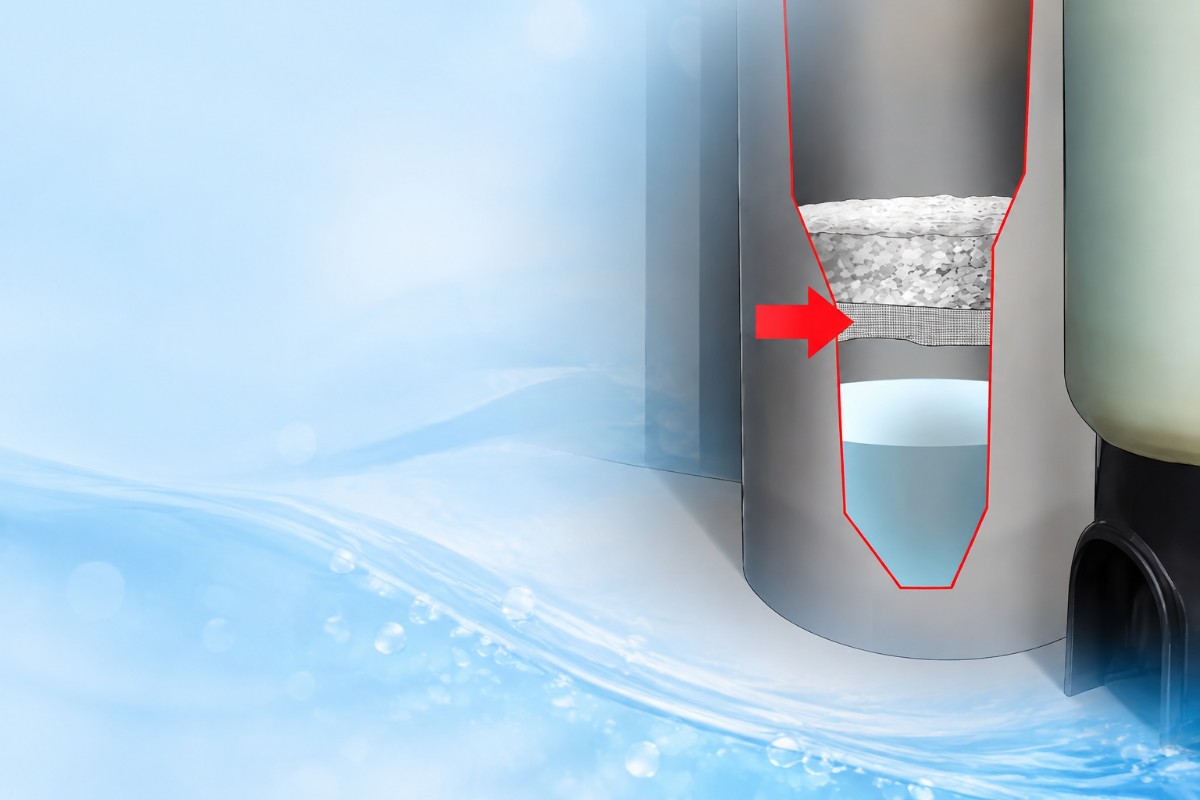
To fix the salt bridge in water softener brine tanks, put the unit in bypass, break the crust with a broom handle, and scoop out the chunks. Add about a gallon of warm water if it’s stubborn, refill with fresh pellet salt to half full, and run a manual regeneration. Most bridges take 20 to 45 minutes.
Your brine tank looks full, and the salt hasn’t dropped in the weeks, yet your dishes are spotty, and your skin feels tight. That’s the classic sign of a salt bridge. If you’re wondering how to fix water softener salt bridge problems yourself, the good news is that it’s one of the easiest repairs a homeowner can do. Here’s exactly what to do, based on what our technicians see in Ohio basements every summer.
What Is a Salt Bridge in a Water Softener?
A salt bridge is a hard crust of fused salt that spans the brine tank, leaving an empty gap or a pool of water underneath. The salt on top can’t reach the water, so no brine forms and the resin beads never recharge. Some people call it a water softener bridge, but it’s the same problem. Left alone, your softener keeps cycling without doing its job. Hard water returns, and scale builds up in your water heater and appliances, which is when professional softener servicing becomes the only real fix.
Signs You Have a Salt Bridge
- Familiar hard water side effects return: spotty dishes, dry skin, and scale on faucets.
- The salt level hasn’t dropped in weeks, even though the unit regenerates.
- The tank looks full, but you can’t see any water below the salt.
Two-minute test: Take off the lid and push a broom handle straight down into the salt. If it stops against something solid well above the tank floor, you’ve found a bridge. A hollow sound when you tap the outside of the tank is another clue.
How to Fix Salt Bridge in Water Softener (Step by Step)
You’ll need: Wooden or plastic broom handle, a plastic scoop or bucket, a wet/dry vac, work gloves and warm tap water. Salt bags are heavy, so lift with your legs.
- Switch to bypass: Use the bypass valve, or shut off the water supply, and check your owner’s manual for your model.
- Scoop out the loose salt: Move the pellets sitting above the crust into a bucket. Dry salt can be reused.
- Break the crust: Follow the methods below.
- Clear the chunks: Remove the broken pieces, and vacuum excess water from the bottom if the tank is soggy.
- Refill and regenerate: Add fresh pellet salt (see choosing the right softener salt), filling no higher than half. Take the unit out of bypass and run a manual regeneration. When it finishes, check a tap with a hardness test strip to confirm the water is soft again.
How to Break Up a Salt Bridge in a Water Softener Safely
Push the handle into the crust with a gentle stirring motion, working from the center outward. You want to crumble the salt, not stab it. Keep the handle away from the tank walls, brine well and float. Never use metal chisels, and don’t hammer the outside of the tank, because the plastic can crack. This is how to break a salt bridge in a water softener when it formed recently.
How to Break a Salt Bridge in a Water Softener That’s Rock Hard
Once you know how to break up salt bridge in water softener tanks, patience is the hard part. If the crust won’t budge, pour about a gallon of warm water over it (never boiling) and wait 30 to 60 minutes. Manufacturers differ on the amount, so check your manual. Wet salt can re-bridge, so stir it daily for a few days afterward.
Why Salt Bridges Form in Ohio Homes
Ohio’s humid summers and damp basements are a perfect setup for bridging. The usual causes are:
- Humidity: Moist basement air makes salt absorb water and fuse together.
- Overfilling: A packed tank compresses the pellets into a crust.
- Low-quality salt: Rock salt and impure blends clump easily.
- Low water use: Salt that sits untouched for months hardens.
- A loose lid: It lets humid air in.
How to Prevent Salt Bridge in Water Softener
- Keep the tank about half full, and top up when the salt nears the water line.
- Use high-purity pellets, not rock salt.
- Keep the lid closed and store salt bags dry.
- Run a dehumidifier in damp basements to keep humidity under 50%.
- Probe the salt monthly, and every two weeks from June to September.
- Deep clean the brine tank once a year.
Don’t want to haul bags? Easton offers doorstep monthly salt refills, and our team carries the salt to your basement for you.
Not a Salt Bridge? Check These Next
If you’ve cleared the crust and the water is still hard, look for salt mushing (sludge at the bottom that needs a full tank clean-out), a clogged injector, a bypass valve left open, or worn resin. Our guide to common water softener problems walks through each one.
When to Call a Pro
Call us if the bridge returns within a few weeks, you find sludge, the tank is cracked or leaking, or the water is still hard after regeneration. Easton Water Solutions serves Bellefontaine and Logan County with expert water softener service. Call 937-592-8379 or book a free in-home water test.
Frequently Asked Questions
How do you fix a salt bridge in a water softener?
Put the softener in bypass and scoop off the loose salt. Break the crust with a broom handle using a gentle stirring motion, remove the chunks, and refill with fresh pellet salt to half full. Then run a manual regeneration. For a stubborn crust, add about a gallon of warm water first.
How do you break up a salt bridge in a water softener?
Use a wooden or plastic handle to crumble the crust from the center outward. Keep it away from the tank walls and brine well, and never use metal tools or hammer the tank. If the crust is too hard, soften it with warm water for 30 to 60 minutes.
What causes a salt bridge in a water softener?
The main causes are humidity, overfilling the tank, low-quality salt, low water usage and a loose lid. Ohio basements in summer are especially prone to bridging because damp air makes salt absorb moisture and fuse.
How do I know if my water softener has a salt bridge?
Look for hard water symptoms, a salt level that isn’t dropping, and a tank that looks full but has no visible water below. Push a broom handle into the salt. If it hits a solid layer above the tank floor, you have a bridge.
Can I use hot water to break a salt bridge?
Warm to hot tap water is generally fine, about a gallon at a time, but never boiling water, which can damage the plastic tank. Check your manual, because some manufacturers specify different amounts.
How do you prevent a salt bridge in a water softener?
Keep the tank about half full, use high-purity pellet salt, and keep the lid closed. Control basement humidity with a dehumidifier, and probe the salt monthly, or every two weeks in summer.
What happens if you don’t fix a salt bridge?
Your softener regenerates without brine, so the resin stops recharging and hard water returns. Scale then builds up in pipes, fixtures and appliances, which can shorten their life and raise energy costs.
Reference:
https://en.wikipedia.org/wiki/Water_softening
https://www.usgs.gov/water-science-school/science/hardnes-water