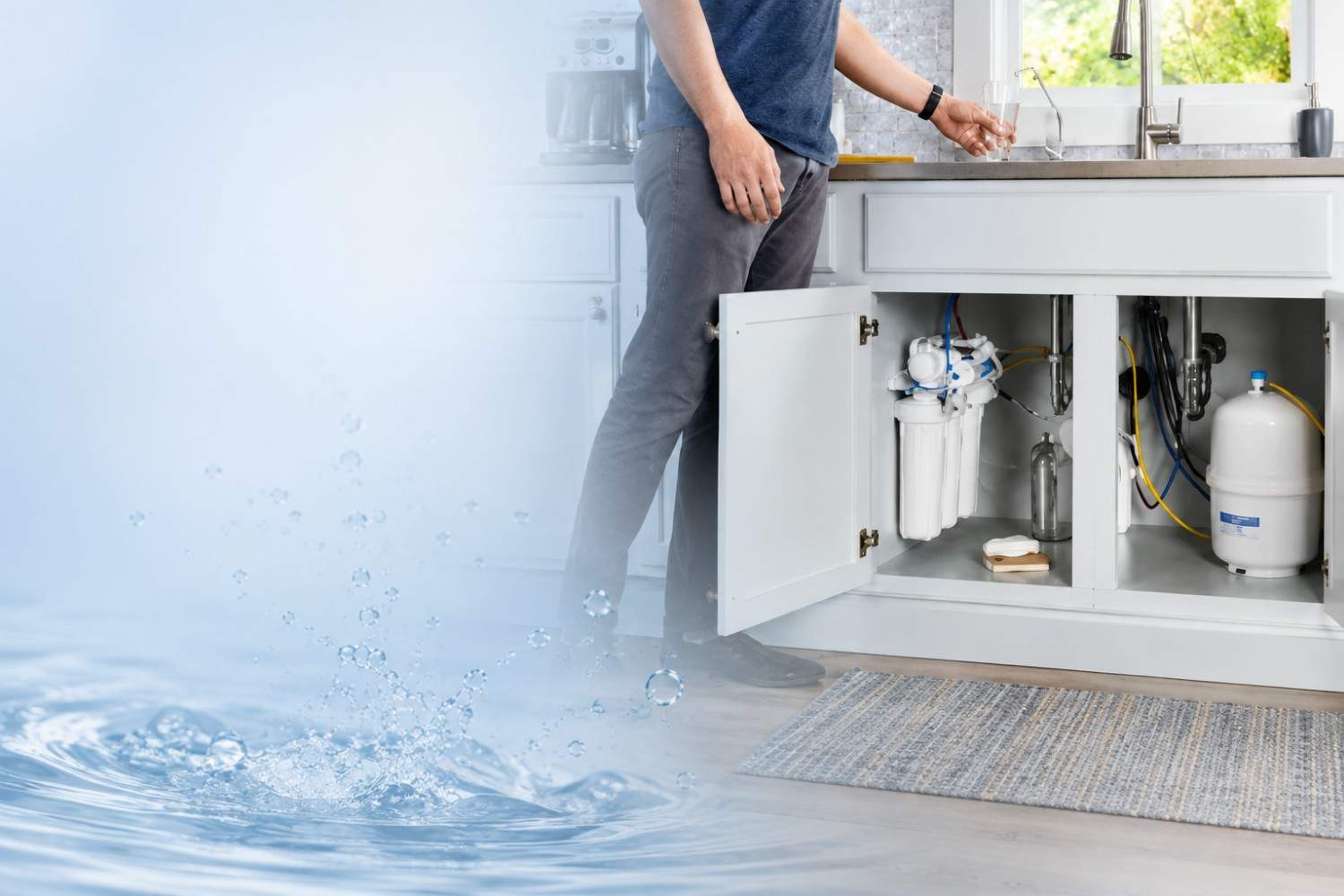
If your reverse osmosis water suddenly tastes off, runs slower than usual, or just doesn’t feel as “clean” as it used to, your filters are probably trying to tell you something. Most homeowners don’t realize their reverse osmosis system needs attention until the water quality has already dropped, because unlike a furnace or a water heater, a failing RO filter doesn’t make noise or flash a warning light. It just quietly stops doing its job.
Here’s how to recognize each sign, why it happens, and what to do about it.
1. Your Water Tastes or Smells Different
This is usually the first thing people notice. Fresh RO water should taste clean and neutral, almost flat, in a good way. If it suddenly tastes metallic, chemical, or slightly like chlorine, your carbon pre-filter is likely exhausted and can no longer block chlorine and chemicals before they reach the membrane. Drinking water systems with reverse osmosis can help ensure your water is properly treated and maintained. A musty or “off” smell can mean the system has sat too long without a proper flush, which allows bacteria to build up inside the housing.
Why it matters: a spent carbon filter doesn’t just affect taste, it exposes your RO membrane, the most expensive part of the system, to chlorine damage that can’t be reversed.
2. Water Flow Has Slowed Down Noticeably
If it now takes noticeably longer to fill a glass or your storage tank refills slowly even when it’s empty, one or more filters are clogged. As sediment and debris build up inside the pre-filters, they restrict water pressure getting to the membrane, and the whole system has to work harder to produce the same amount of water.
A slow, steady decline is normal wear. A sudden drop in flow can also point to a failing tank bladder or a valve issue, so if new filters don’t fix it, that’s worth a professional look.
3. Water Looks Cloudy or Has Visible Particles
Reverse osmosis water should be crystal clear. Cloudiness, floating specks, or a gritty texture in your glass means the sediment filter is saturated and letting particles pass through instead of trapping them. In Ohio homes on well water, this is especially common after heavy rain, when sediment loads spike.
Note: a small amount of temporary cloudiness right after installing brand-new filters is normal; it’s usually trapped air or carbon fines and clears within a day.
4. Your TDS Reading Has Crept Up
A Total Dissolved Solids (TDS) meter is the most objective way to check filter performance, and it takes the guesswork out of “does this water taste different, or am I imagining it?” Test your tap water, then test your RO water. A properly working system should reject roughly 90–99% of dissolved solids. If your RO reading starts climbing toward your tap water number, the membrane or pre-filters are no longer filtering effectively, even if the water still looks and tastes fine for now.
This single 30-second test catches problems before your taste buds do, which is why we recommend it as part of any reverse osmosis maintenance routine.
5. Filters Are Visibly Worn or Simply Overdue
Pull your sediment and carbon filters and look at them. Discoloration, a brownish tint, or visible grime is a clear sign they’re past their useful life. And even if a filter looks okay, age matters: most sediment and carbon filters need replacement every 6–12 months, and the RO membrane every 2–3 years, regardless of appearance. Households on well water, or anywhere with heavier sediment and hardness, often land on the shorter end of that range.
An overdue filter isn’t just a water-quality issue it puts sustained extra strain on the membrane, which is the costliest part to replace.
Why This Matters More for Ohio Homeowners
Ohio’s water varies a lot by source. Homes on municipal water in cities like Columbus, Dayton, and Cincinnati deal with seasonal sediment spikes and disinfection byproducts, while private well users across Logan County and Central Ohio commonly face iron, hardness, and higher sediment loads that shorten filter life. We’ve tested water in homes across the region, and the pattern is consistent: the harder or more mineral-heavy the source water, the more these five signs show up ahead of schedule. If you’re unsure what’s actually in your water, a free water test will tell you exactly what your filters are up against.
What Happens If You Ignore These Signs
Delaying a filter change doesn’t just mean slightly worse-tasting water. A clogged pre-filter forces sediment toward the membrane, which can permanently damage it, while a spent carbon filter lets chlorine reach the membrane and degrade it over time. Since the membrane costs far more to replace than the pre-filters that protect it, catching these signs early is the cheapest way to keep your system running for years.
Frequently Asked Questions
How often should I change my reverse osmosis filters?
Most sediment and carbon pre-filters should be replaced every 6–12 months, and the RO membrane every 2–3 years. Homes with well water or heavier sediment often need changes on the shorter end of that range. See our full RO maintenance checklist for a detailed schedule.
Can I change RO filters myself, or do I need a professional?
Most sediment and carbon filter swaps are a simple DIY job that takes about 30 minutes. Membrane replacement, sanitizing the system, or diagnosing a sudden pressure or leak issue is best left to a professional to avoid damaging the housing or seals.
Is cloudy water normal after installing new RO filters?
Yes, brief cloudiness right after a filter change is common and usually clears within 24 hours. It’s typically trapped air or leftover carbon fines, not a sign of a problem.
How do I know if it’s the filter or the membrane that’s failing?
Test your TDS before and after the system. If TDS is high but flow and taste seem otherwise normal, the membrane is likely the issue. If flow is slow and taste changed but TDS looks fine, a clogged pre-filter is the more likely cause.
Does hard water affect how often I need new RO filters?
Yes. Higher mineral content and sediment, common in Ohio well water, cause filters to clog faster, which is why hard-water households often need replacements closer to the 6-month mark.
How much do RO replacement filters cost?
Pre-filters typically cost less to replace than the membrane, and most households spend a modest amount per year on routine filter changes, far less than replacing the entire system or a damaged membrane from neglect.
Conclusion
You don’t need to wait for a calendar reminder to know something’s wrong. A change in taste, slower flow, cloudy water, a rising TDS (total dissolved solids) reading, or visibly worn filters are your system’s way of asking for maintenance. Catch any of these early, and a simple filter swap is usually all it takes.
If you’re seeing one or more of these signs, Easton Water Solutions can test your water, confirm what’s happening, and get your system back to producing clean, great-tasting water often the same day.